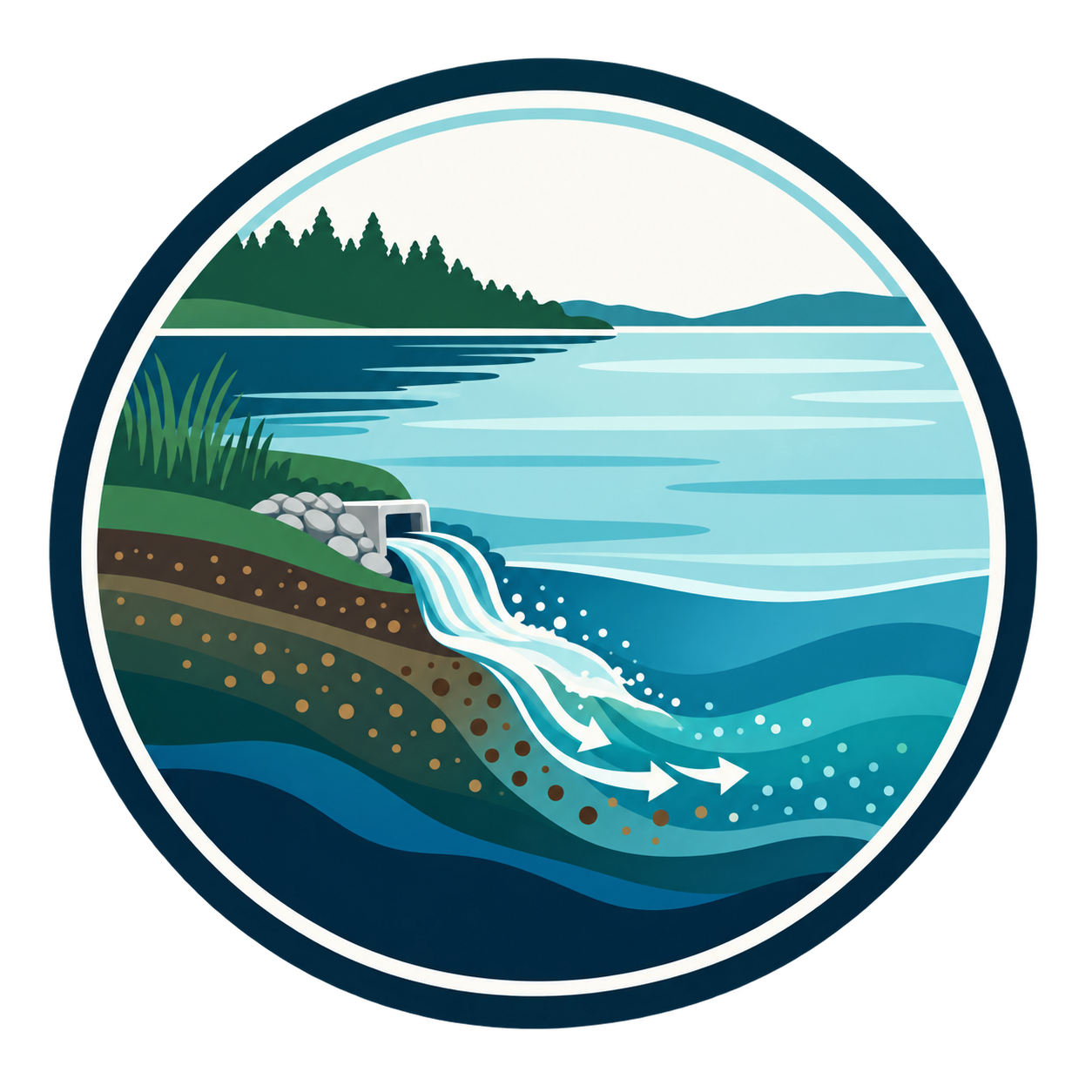
Assessment to restoration
A restoration pathway built around evidence
Cascade doesn’t begin by prescribing equipment. We begin by determining how phosphorus moves through the lake, where it becomes concentrated, and whether a feasible engineered export pathway exists.
01 · Cascade Assessment
Know whether removal matters before investing in treatment
The Cascade Assessment determines whether permanent phosphorus removal can materially change a lake and whether treatability work or a field pilot is justified.
No fixed price is published in V1; scope depends on the lake and available evidence.
Submit Your Lake- Existing-data and lake-management review
- Preliminary phosphorus mass balance
- Internal versus external loading assessment
- Candidate extraction or interception zones
- Seasonal removal opportunity
- Additional sampling requirements
- Preliminary permitting screen
- Conceptual pilot approach
- Initial economics and go/no-go recommendation
02 · Cascade Treatability Study
Test real water before choosing a process
Organic matter, suspended solids, iron, alkalinity, competing ions, and flow conditions can dramatically alter the performance of phosphorus-capture technologies.
Measure P removal · throughput · energy · reagents · media use · headloss · residuals · regeneration · operating cost
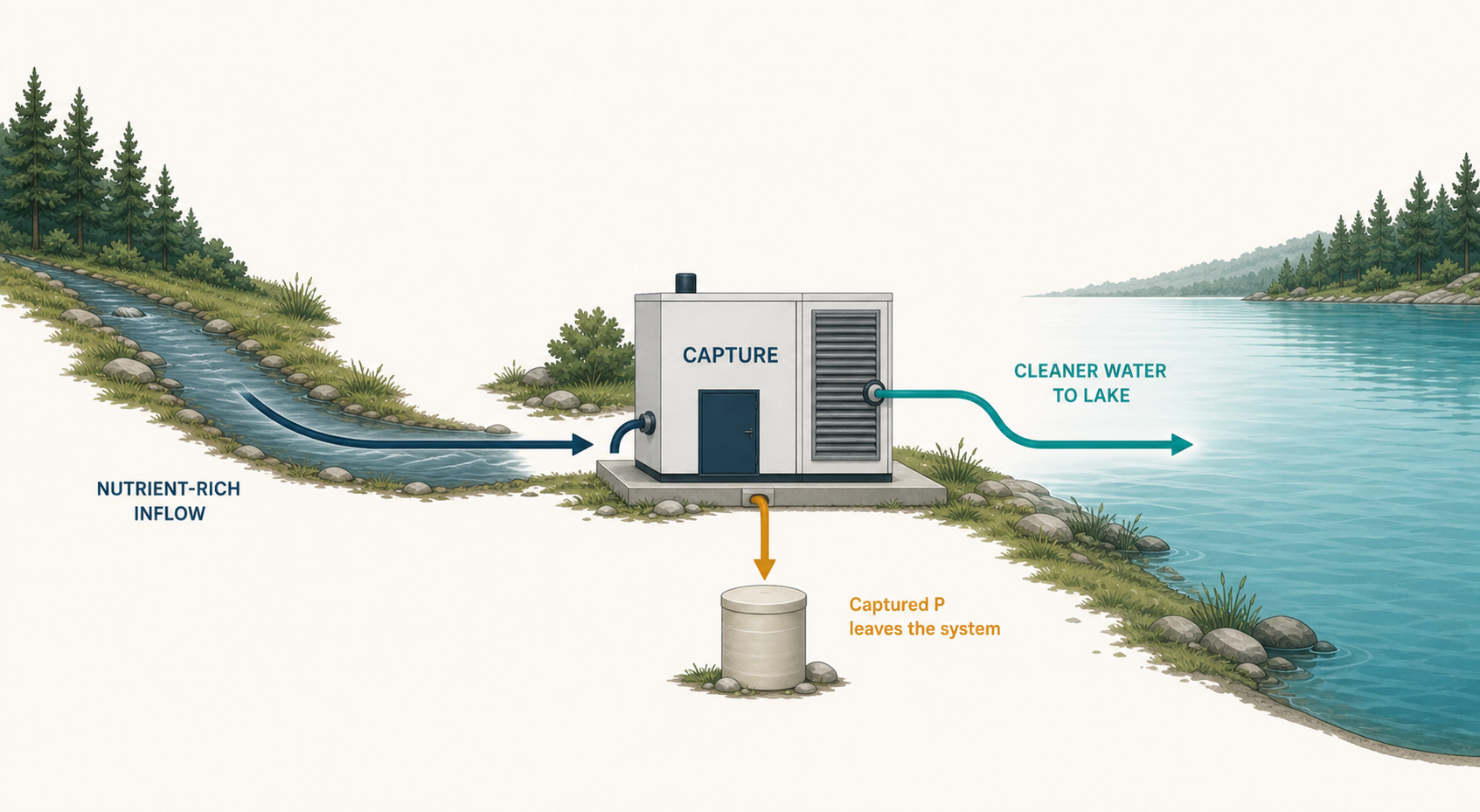
Concentrated inflows
Capture phosphorus before it reaches the lake
Cascade Aquatics is developing modular nutrient-removal systems that target phosphorus where nature has already concentrated it—inside impaired lakes and in nutrient-rich inflows.
03 · Cascade Pilot
Prove removal in the field
The pilot moves the best-supported treatment approach into the field. The goal is not merely a lower effluent concentration—it is a defensible phosphorus mass balance and credible operating economics.
04 · Cascade Restoration
Restoration as a service
For appropriate lakes, Cascade’s long-term model is Restoration-as-a-Service: owning or operating modular systems and managing the extraction, capture, monitoring, and reporting required for a measurable nutrient-removal program.
Customers should not have to become treatment-plant operators to restore their lake.
Start with the lake
Could permanent phosphorus removal matter for your lake?
Tell us what is happening, what data you have, and what your community is trying to restore.