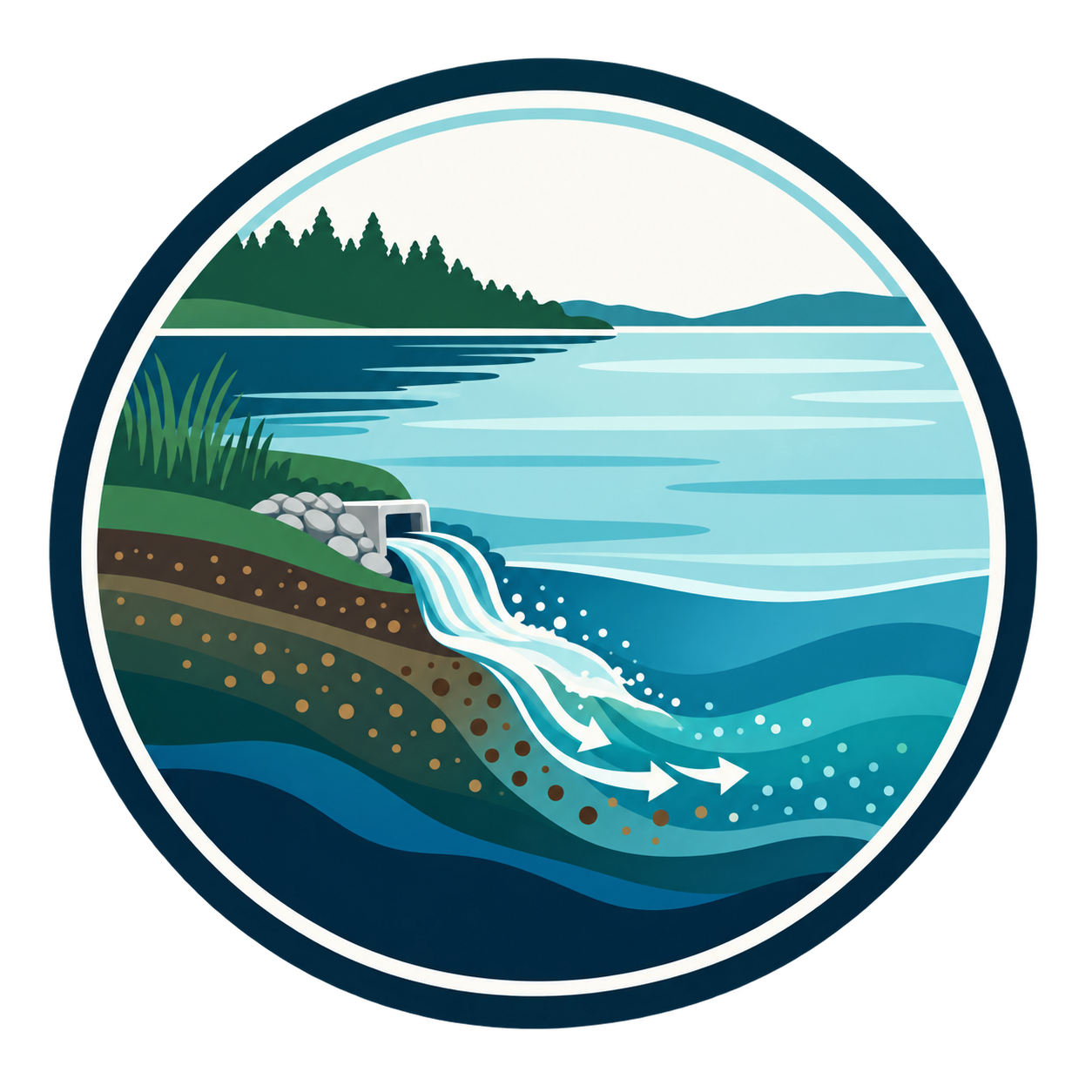
More fuel for algae
Excess phosphorus can accelerate eutrophication—the enrichment of water that supports excessive algae and cyanobacteria. Some cyanobacterial blooms can produce toxins.
Phosphorus removal for impaired lakes
Cascade Aquatics is developing modular nutrient-removal systems that target phosphorus where nature has already concentrated it—inside impaired lakes and in nutrient-rich inflows.
Not ready for the full form? Start with an email.
Initially focused on freshwater lakes in Wisconsin, Minnesota, and Michigan.
The phosphorus problem
Phosphorus is essential to aquatic life in normal amounts. Too much can push a freshwater lake toward eutrophication: nutrient enrichment that fuels excessive growth and destabilizes the lake’s ecological balance.
Phosphorus is not the only factor behind every bloom. But in many freshwater lakes, it is a key nutrient that limits how much algae can grow—which makes excess phosphorus an important restoration target.
Excess phosphorus can accelerate eutrophication—the enrichment of water that supports excessive algae and cyanobacteria. Some cyanobacterial blooms can produce toxins.
Dense growth can reduce water clarity and shade underwater plants that provide food and habitat.
When algae and plants die, decomposition consumes oxygen. Low oxygen can stress fish and other aquatic life, especially in deeper water.
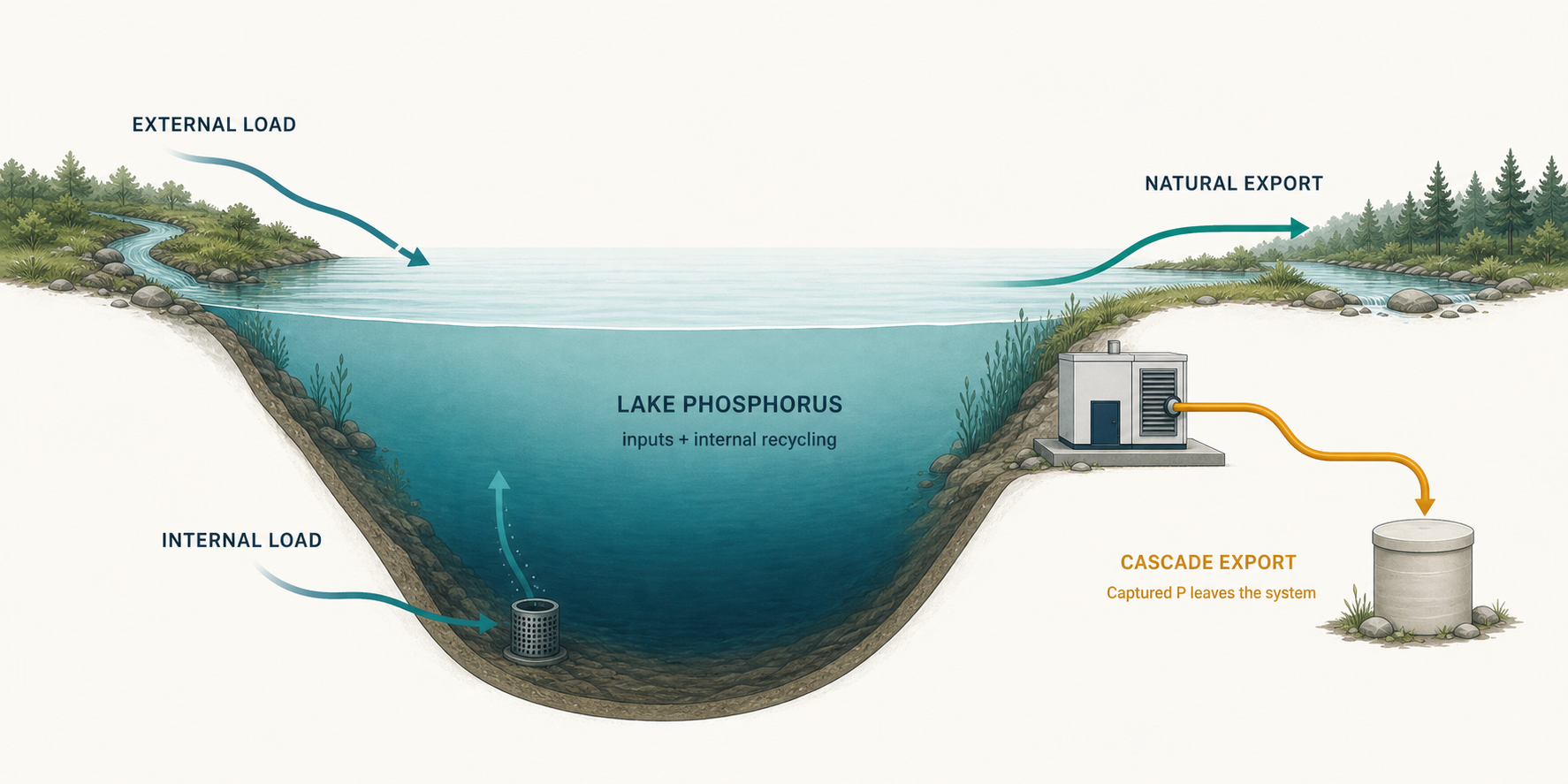
In some lakes, low-oxygen conditions favor phosphorus release from bottom sediments, making stored phosphorus available again.
The visible consequences can include recurring blooms, surface scums, odors, poor swimming conditions, fishery stress, and lost recreational value.
Persistent impairment
Stopping new phosphorus at the source remains essential. Yet some lakes continue to experience blooms and poor clarity after major watershed improvements.
Phosphorus accumulated over decades can remain stored in bottom sediments. Under low-oxygen conditions, some of it can be released back into the water column and become available again. This internal loading can keep feeding the lake long after an original input entered it.
Source control slows what enters. It does not automatically remove the legacy phosphorus already cycling inside the lake.
Why physical export
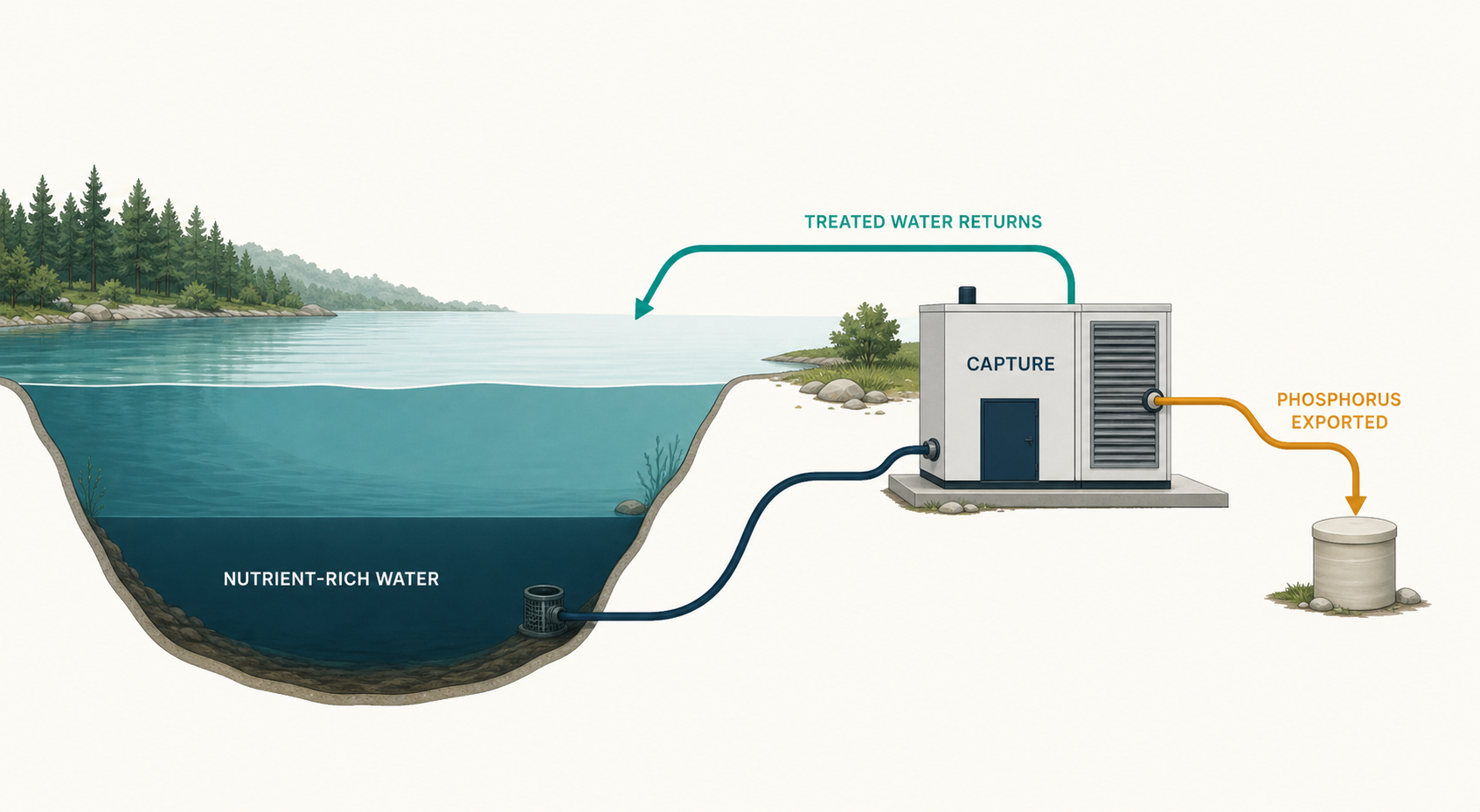
Many restoration strategies reduce new inputs or keep phosphorus bound in place. Cascade is developing a complementary pathway: capture phosphorus into a controllable residual and physically remove that material from the aquatic system.
The goal is not simply cleaner water leaving a treatment unit. It is a measured reduction in the phosphorus mass available to recycle within the lake.
Identify deep water, sediment-interface water, inflows, or events where more phosphorus can be reached per gallon treated.
Move phosphorus from the water into a controllable solid, media, or treatment residual.
Physically move the phosphorus-bearing residual out of the aquatic system instead of returning it with the water.
Pair flow with influent and effluent phosphorus concentrations to calculate exported mass and track lake response.
Physical export will not be appropriate for every lake, and it does not replace watershed controls. The nutrient budget must show that a realistic removal rate can matter.
A distinct pathway
Binds or immobilizes phosphorus
Treatment material is typically applied to the waterbody
Bound phosphorus remains within the lake system
Proven and highly effective in appropriate lakes
Captures phosphorus in a controllable treatment process
Preferentially treats water outside the lake
Physically removes captured phosphorus from the aquatic system
Creates a measurable phosphorus mass balance
Alum and other established approaches remain important restoration tools. Cascade is developing another option for lakes where permanent nutrient export may provide meaningful value.
The Cascade Method
The process starts with the lake’s nutrient budget, then moves through targeted extraction, external capture, safe return water, and measurable verification.
The detailed technology and treatment train are selected only after the lake evidence supports them.
Explore the technology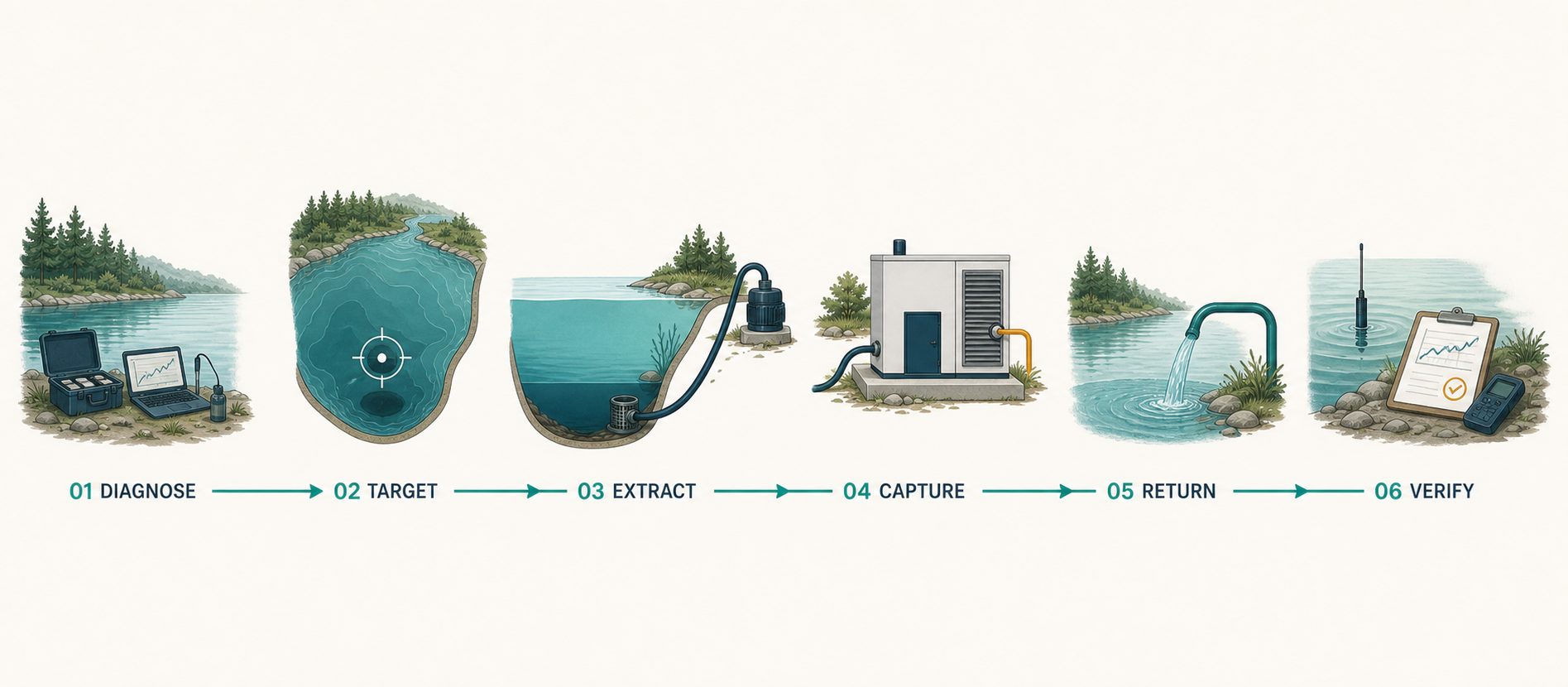
Commercial pathway
Cascade Assessment
Review the nutrient budget, candidate extraction zones, existing data, removal feasibility, preliminary permitting pathway, and the evidence needed for a go/no-go decision.
Request an assessmentCascade Treatability Study
Compare capture approaches using actual water chemistry and estimate operating requirements, residuals, and removal economics.
Learn about treatabilityCascade Pilot
Deploy a modular field system to verify phosphorus mass export, operating performance, and ecological compatibility.
Become a pilot partnerCascade Restoration
Future multi-season systems centered on verified removal objectives—not on asking customers to operate a treatment plant.
Explore the pathwayFit before equipment
Permanent nutrient removal only makes sense when the nutrient budget supports it.
Can removing a realistic amount of phosphorus materially change this lake?
Start with the lake
Cascade is identifying a small number of Midwest lakes with established data, evidence of internal loading or concentrated inflows, organized decision-making, and a strong interest in accelerating restoration.